
IT training across Europe - tecnovy makes you future-ready.

iSAQB® ADOC - Architecture Documentation

arc42, C4 and ISO/IEC 42010 give architecture documentation a structure. Architecture Decision Records capture why a decision was made and which option was rejected. Docs-as-Code keeps both current next to the source code, and the 2025.1 curriculum brings GenAI tools into that work. In the tecnovy ADOC training you decide which of these formats fit your project, and practise on documented example architectures.
iSAQB Accredited Training PartnerAttendance certificate4.8/5 on ProvenExpert

What this module delivers.

ADOC separates the documentation review from the architecture review and makes it a craft of its own. At tecnovy you structure documentation around stakeholders, record decisions as Architecture Decision Records, and assess existing documentation with your own checklists.

How the training runs

Method
Document case studies, assess other people's documentation in reviews
Outcome
20 credit points, all methodical, no course exam

Dates & booking

Choose a date that fits

8 dates

  • EUREuro
  • USDUS Dollar
  • CHFSwiss Franc

Sessions with this symbol offer up to 25% group discount. Click “Details & Registration” to learn more.

27–28 Oct 2026CET
Tue–Wed 09:00–17:00
Switzerland Group Discount
City Zürich
Language German
Trainer Dr. Gernot Starke
Seats 5+ seats
10% Earlybird Discount

2,065 $−207 $1,858 $

excl. VAT
02–03 Nov 2026CET
Mon–Tue 09:00–17:00
Online training Group Discount
Time zone CET
Language English
Trainer Matthias Bohlen
Seats Only 5 left
10% Earlybird Discount

1,693 $−169 $1,524 $

excl. VAT
22–23 Feb 2027CET
Mon–Tue 09:00–17:00
Online training Group Discount
Time zone CET
Language German
Trainer Matthias Bohlen
Seats 5+ seats
10% Earlybird Discount

1,693 $−169 $1,524 $

excl. VAT
10–11 May 2027CEST
Mon–Tue 09:00–17:00
Online training Group Discount
Time zone CEST
Language English
Trainer Matthias Bohlen
Seats 5+ seats
10% Earlybird Discount

1,693 $−169 $1,524 $

excl. VAT
02–03 Jun 2027CEST
Wed–Thu 09:00–17:00
Germany Group Discount
Venue to be announced
Language German
Trainer Dr. Gernot Starke
Seats Only 4 left
10% Earlybird Discount

1,868 $−186 $1,682 $

excl. VAT
09–10 Sep 2027CEST
Thu–Fri 09:00–17:00
Switzerland Group Discount
Venue to be announced
Language German
Trainer Dr. Gernot Starke
Seats 5+ seats
10% Earlybird Discount

2,315 $−232 $2,083 $

excl. VAT
20–21 Sep 2027CEST
Mon–Tue 09:00–17:00
Online training Group Discount
Time zone CEST
Language German
Trainer Matthias Bohlen
Seats 5+ seats
10% Earlybird Discount

1,693 $−169 $1,524 $

excl. VAT
08–09 Nov 2027CET
Mon–Tue 09:00–17:00
Online training Group Discount
Time zone CET
Language English
Trainer Matthias Bohlen
Seats 5+ seats
10% Earlybird Discount

1,693 $−169 $1,524 $

excl. VAT

Fit

Who this module is designed for

Typical roles

  • You own how a system's architecture gets described and recorded.
  • You inherit large or outdated documentation and have to make it usable again.
  • You review other teams' documentation and give them feedback on it.

Prerequisites

No prerequisites

You can start right away. Helpful: hands-on experience creating and maintaining technical documentation, experience with large or outdated bodies of documentation, some exposure to reviewing documents or code.

Consider instead ARCEVAL Works through the named procedures ATAM, CBAM and DCAR for evaluating the architecture itself, and spends 150 of its 570 minutes on scenario-based workshops.

Curriculum

CPSA® ADOC Course in Detail

Curriculum 2025.1 splits ADOC into six parts across 720 minutes, 245 of them exercise time. It runs from the fundamental terms through process, content elements and tools to reviewing documentation somebody else wrote. Real case studies close it, rather than another chapter of theory.

01Fundamental terms of architecture documentation

This part settles what people actually mean when they say architecture documentation.

  • The purpose and goals of documentation, seen from each stakeholder's angle
  • Where it ends and requirements, user and operations documentation begin
  • Notations from UML to the informal sketch, and when each one holds
  • Matching documentation effort to the development process in use
02Process for architecture documentation

This part builds the process by which documentation is planned and maintained across a team.

  • Identifying target groups and goals before the first page exists
  • Setting structure, roles and artifacts for shared maintenance
  • Comparing and selecting arc42, C4 and ISO/IEC 42010 as templates
  • Identifying application scenarios for GenAI in documentation
03Elements of architecture documentation

The largest part of the curriculum, with as much exercise time as teaching time.

  • Building block, runtime and deployment views, and who reads each of them
  • Architecture Decision Records carrying the decision and the options rejected
  • Cross-cutting concepts, constraints, quality goals and technical risks
  • Keeping the individual parts of a document set consistent with each other
04Tools

This part answers what documentation is actually written and maintained with.

  • Analog and digital tools, modeling tools and complete tool chains
  • Defining requirements on tools and artifacts before anything is selected
  • Docs-as-Code with PlantUML and versioning next to the source code
  • Applying GenAI tools in support of architecture documentation
05Evaluating documentation

Here you draw the line between a documentation review and an architecture review.

  • Checking whether documentation is fit for purpose rather than complete
  • Content assessment against formal assessment, each with its own goals
  • Writing your own checklists and question catalogues for reviews
  • Taking the author, reviewer and facilitator roles in a review
06Examples of software architecture documentation

To close, real documentation is on the table rather than another method.

  • Real and representative case studies of documented software architectures
  • arc42 by Example, which the curriculum names as an example
  • Explaining the advantages and disadvantages of the documentation shown
Official syllabus(external link)

Outcome

What you will be able to do afterwards

  1. 01

    You separate architecture documentation from other kinds of documentation and choose fitting notations.

  2. 02

    You identify the target groups of a document set and design its structure from them.

  3. 03

    You choose between arc42, C4 and ISO/IEC 42010, and justify the decision.

  4. 04

    You record architecture decisions as Architecture Decision Records, including the options you rejected.

  5. 05

    You apply building block, runtime and deployment views and keep them consistent with each other.

  6. 06

    You set up a Docs-as-Code tool chain and use GenAI tools at defined points in it.

  7. 07

    You build review checklists, run a documentation review and derive improvements from its results.

Credit points toward CPSA-A

Methodical competence
20
Technical competence
0
Communicative competence
0

20 of 70 points toward CPSA-A admission

Why tecnovy

What you get on top with us

02

Certificate Showroom

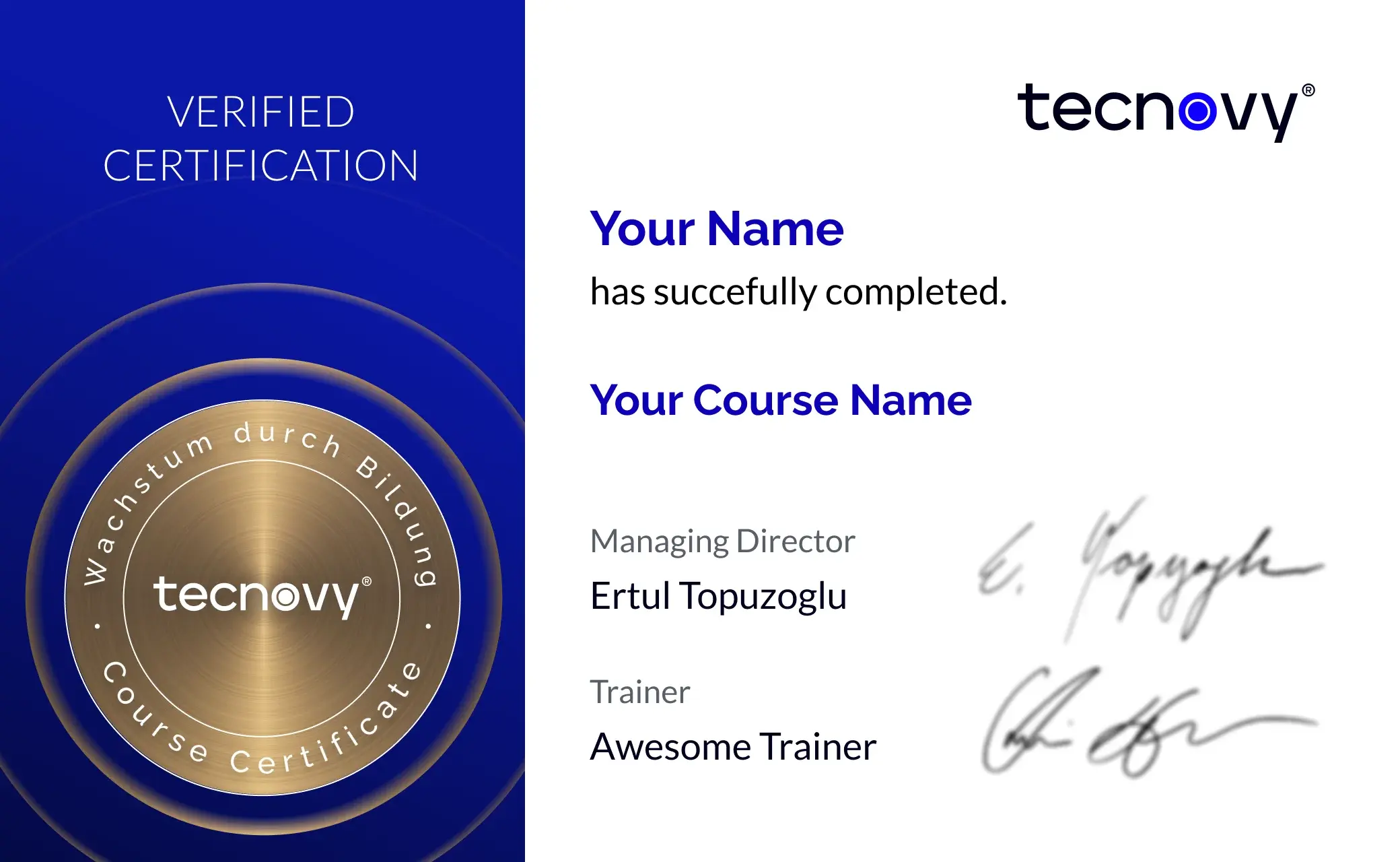
Get your certificate of participation and, if you have one, add your exam certificate from E-Learning. Fully automated, beautifully designed. Just for you, only at tecnovy.

03

No Slideshow, Hands-On!

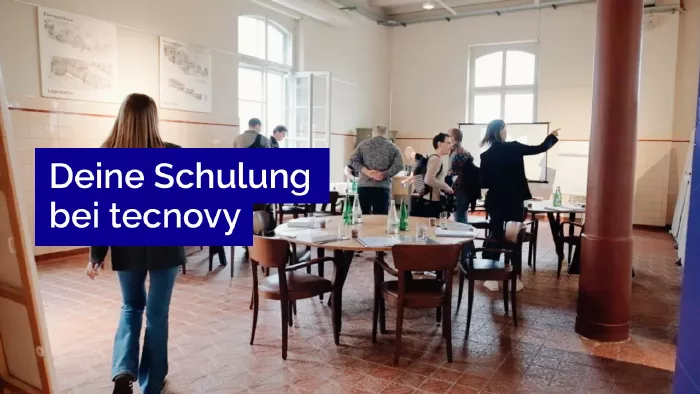
Promised: no PowerPoint marathon. We work in groups, tie theory to practice, and you get real project examples from our experienced trainers plus the exchange with like-minded people.

04

Attend Twice, Pay Once

You are welcome to attend the training online again within a year as a refresher.

05

Learn from Authors

Your instructors are not just trainers, but the authors of the preparatory literature for the iSAQB CPSA-F certification exam and at the same time an active member of the iSAQB Foundation group.

06

Flexible Date Change

If you are not able to attend the course, you can rebook your training free of charge up to one week before the start of the training.

Experiences

What participants say

Why tecnovy? Well, I found available dates for online trainings and I decided to try. After the first one (ADOC) I was already recommending tecnovy to my colleagues. The online trainings are interesting and interactive enough to keep people engaged, even when a training needs multiple days.
Petar Petrovic SW Architect | Robert Bosch GmbH

FAQs

Frequently asked questions

01Do I need CPSA-F to attend the tecnovy ADOC training?
No. The iSAQB curriculum for the ADOC module lists Foundation Level knowledge as recommended, not as a condition for attending the training. For the later CPSA-A certification, the CPSA-F certificate is mandatory.
02Is there an ADOC examination?
No. There is no examination for the ADOC module. The tecnovy ADOC training earns you 20 credit points and a certificate of participation; the assessment comes later on the path to CPSA-A certification, and it covers all modules together.
03How many credit points does ADOC carry?
The tecnovy ADOC training carries 20 credit points, all of them in methodical competence. ADOC awards no technical and no communicative points, which matters for your planning: CPSA-A admission requires 70 points in total and at least 10 in each of the three areas of competence. Credit points you have already earned do not expire and remain valid indefinitely. A module's point allocation is a separate matter: the iSAQB may re-evaluate it every 12 months, so the number of points and their split across the areas of competence can change for future attendances. These figures are as of August 2026.
04How does the CPSA-A certification work?
CPSA-A certification consists of a written assignment. Two examiners recognised by the iSAQB assess it, and you then defend it in discussion with them. You can take it in German or English, and tecnovy is glad to help if you have questions about the process.
05How long is the ADOC training?
The tecnovy ADOC training runs for two days. The iSAQB curriculum 2025.1 sets exactly those two days as the minimum for ADOC and budgets 720 minutes in total, of which 475 are teaching time and 245 are exercise time.
06What is the difference between ADOC and ARCEVAL?
ADOC assesses the documentation of an architecture, ARCEVAL assesses the architecture itself. ADOC builds checklists and question catalogues for documentation reviews, while ARCEVAL works through the named procedures ATAM, CBAM and DCAR and spends 150 of its 570 minutes on scenario-based workshops alone. Both modules carry the same 20 methodical credit points, so the subject decides the choice and the points do not.
07Does ADOC cover the use of GenAI in documentation?
Yes. The iSAQB curriculum 2025.1 of December 2025 devotes two learning goals to it, application scenarios for GenAI in documentation (LG 2-5) and the use of GenAI tools to support architecture documentation (LG 4-4). The tecnovy ADOC training covers both and places those tools inside the documentation tool chain.
08What does the abbreviation ADOC stand for?
ADOC stands for architecture documentation; the iSAQB names the module "Module ADOC Architecture Documentation". The spelling ADOK, common in German-speaking markets, refers to the same module. The abbreviation does not stand for "Agile Documentation": the curriculum treats agile development as one case you adapt your documentation effort to, nothing more.
09Do I get the flipcharts from the ADOC training?
Yes. The flipcharts produced in the tecnovy ADOC training reach you afterwards as a photo protocol, so the results you worked out together do not stay on the paper.
ADOCADOC - Architecture Documentation

Ready for the next step?

Choose a public date or plan the course for your team.

Feedback Form
What should we improve?

Tell us what we can do better next time.

Success
Error

© Copyright 2026, tecnovy GmbH, All Rights Reserved