IT training across Europe - tecnovy makes you future-ready.

iSAQB® GREEN - Green Software, Development of Resource-Efficient Applications

The energy your systems consume has become a reporting obligation: CSRD and the Greenhouse Gas Protocol demand figures that have to come out of IT. GREEN is the iSAQB module that turns those figures into a design criterion. Nine curriculum parts run from the algorithm through architecture styles and cloud operation into the CI/CD pipeline. You leave able to put a number on an application's footprint and show which rebuild actually lowers it.
iSAQB Accredited Training PartnerAttendance certificate4.8/5 on ProvenExpert

What this module delivers.

What is not measured cannot be reduced. The tecnovy GREEN training starts with the Software Carbon Intensity and the data centre metrics; you then decide across architecture, data handling and AI models where your team saves energy.

How the training runs

Method
Measure consumption, weigh saving options against each other
Outcome
20 credit points: 10 methodical, 10 technical, no course exam

Dates & booking

Choose a date that fits

3 dates

  • EUREuro
  • USDUS Dollar
  • CHFSwiss Franc

Sessions with this symbol offer up to 25% group discount. Click “Details & Registration” to learn more.

21–22 Sep 2026CEST
Mon–Tue 09:00–17:00
Switzerland Group Discount
City Zürich
Language German
Trainer PK Peter Kutschera
Seats 5+ seats
10% Earlybird Discount

2,036 $−204 $1,832 $

excl. VAT
09–10 Nov 2026CET
Mon–Tue 09:00–17:00
Online training Group Discount
Time zone CET
Language German
Trainer PK Peter Kutschera
Seats 5+ seats
10% Earlybird Discount

1,672 $−167 $1,505 $

excl. VAT
07–08 Dec 2026CET
Mon–Tue 09:00–17:00
Germany Group Discount
Venue to be announced
Language German
Trainer PK Peter Kutschera
Seats 5+ seats
10% Earlybird Discount

1,845 $−184 $1,661 $

excl. VAT

Fit

Who this module is designed for

Typical roles

  • You have to produce evidence for a system's energy use or its CO2 balance.
  • You weigh efficiency requirements against availability and scalability.
  • You run AI models and answer for the compute they demand.

Prerequisites

No prerequisites

You can start right away. Helpful: hands-on design of small to medium-sized software systems, experience monitoring systems in production, some exposure to cloud providers and CI/CD pipelines.

Consider instead CLOUDINFRA Gives the cloud platform the whole module, from the cloud native journey through to operation, where GREEN treats operation in 105 of its 720 minutes as one lever for cutting energy.

Curriculum

CPSA® GREEN Course in Detail

Curriculum 2026.1 splits GREEN into nine parts across 720 teaching minutes. It starts at the role of IT in climate change and the reporting obligations, runs through measurement and quality to software development, architecture and operation, and closes at AI models and your own delivery pipeline.

01Climate change, opportunities of digitalisation, role of IT, basic concepts

This part fixes the terms the rest of the course calculates with.

  • CO2 footprint against CO2 handprint
  • Savings through IT against savings within IT
  • IT energy use compared across sectors, counted in CO2 equivalents
02Principles, regulation and effects on companies

This is where an environmental topic becomes your company's reporting duty.

  • The Greenhouse Gas Protocol as the accounting framework
  • CSRD and ESG: what has to be reported and who supplies the figures
  • Blue Angel and TCO certification for software and hardware
03Quality

Energy efficiency becomes a quality property here, with a scenario and evidence.

  • Placing it in the ISO 25010 quality model
  • Writing quality scenarios and documenting them in arc42
  • Trade-offs against elasticity, scalability, modularity and resilience
04Measurement and monitoring

The part that makes every later saving provable in the first place.

  • Calculating the Software Carbon Intensity as an ISO standard
  • Weighing business metrics against proxy metrics
  • Measurement tools at hardware level and server monitoring
  • Carbon footprint tooling from the major cloud providers
05Software development

Here the code itself decides what gets consumed.

  • Ahead-of-time against just-in-time compilation
  • The trade-offs garbage collection forces
  • Computational complexity of algorithms as an energy question
  • Finding energy code smells, agentic coding included
06Software architecture

The longest part of the curriculum: the design decisions with the most leverage.

  • Monolith, microservices and serverless compared by consumption
  • Green IT patterns from the Green Software Foundation
  • W3C Web Sustainability Guidelines for web front ends
  • Relational against NoSQL storage, and what each of them costs
07Operation

This part judges the data centre and the cloud your system runs on.

  • PUE and SIEC as data centre efficiency metrics
  • REF, CUE and WUE for energy mix, CO2 output and water use
  • IaaS, PaaS, SaaS and serverless compared by consumption
  • GreenOps as an operating practice
08Artificial intelligence and sustainability

AI shows up here as a consumer, from training through to inference.

  • Quantization, pruning and knowledge distillation to shrink models
  • Transfer learning, fine-tuning and choosing between edge and cloud inference
  • Operational against embodied carbon, and the rebound effect
09Energy-efficient development process

To close, you turn on the consumption of your own tool chain.

  • Peak-shaving, time-shifting and location-shifting of compute load
  • Test impact analysis instead of full test runs
  • Infrastructure as code and optimized container layering
Official syllabus(external link)

Outcome

What you will be able to do afterwards

  1. 01

    You calculate a system's Software Carbon Intensity and choose proxy metrics that fit it.

  2. 02

    You map CSRD, ESG and the Greenhouse Gas Protocol onto your company's reporting obligations.

  3. 03

    You state energy efficiency as an ISO 25010 quality scenario and document it in arc42.

  4. 04

    You spot energy code smells and judge compilation and garbage collection by what they consume.

  5. 05

    You compare monolith, microservices and serverless against the Green Software Foundation green IT patterns.

  6. 06

    You assess data centres and cloud regions through PUE, CUE, REF and WUE.

  7. 07

    You cut the energy demand of AI models through quantization, pruning and knowledge distillation.

  8. 08

    You plan CI/CD runs using time-shifting, test impact analysis and optimized container layering.

Why tecnovy

What you get on top with us

02

Certificate Showroom

Get your certificate of participation and, if you have one, add your exam certificate from E-Learning. Fully automated, beautifully designed. Just for you, only at tecnovy.

03

No Slideshow, Hands-On!

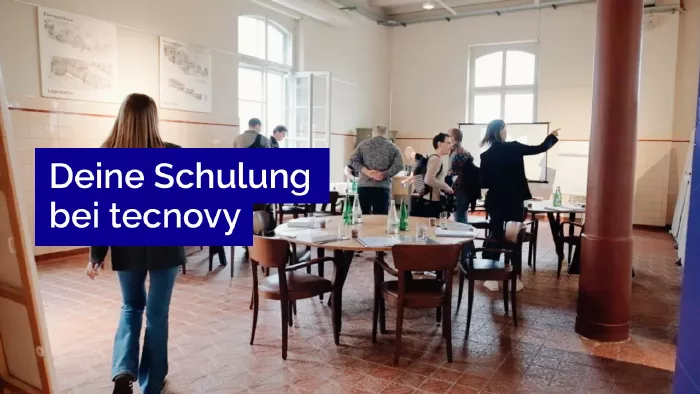
Promised: no PowerPoint marathon. We work in groups, tie theory to practice, and you get real project examples from our experienced trainers plus the exchange with like-minded people.

04

Attend Twice, Pay Once

You are welcome to attend the training online again within a year as a refresher.

05

Learn from Experts

We always guarantee you the use of didactically and methodically first-class qualified trainers who draw their knowledge from training experience as well as professional practical and project experience.

06

Flexible Date Change

If you are not able to attend the course, you can rebook your training free of charge up to one week before the start of the training.

FAQs

Frequently asked questions

01Do I need CPSA-F to attend the tecnovy GREEN training?
No. The iSAQB curriculum for the GREEN module lists practical experience only as a prerequisite, not a certification. For the later CPSA-A certification, CPSA-F is mandatory.
02Is there a GREEN examination?
No. There is no examination for the GREEN module. The tecnovy GREEN training earns you 20 credit points and a certificate of participation; the assessment comes later on the path to CPSA-A certification, and it covers all modules together.
03How many credit points does GREEN carry?
The tecnovy GREEN training carries 20 credit points: 10 methodical and 10 technical. GREEN awards no communicative points, and CPSA-A admission requires 70 points in total and at least 10 in each of the three areas of competence. The iSAQB may re-evaluate point allocations every 12 months; these figures are as of August 2026.
04How does the CPSA-A certification work?
CPSA-A certification consists of a written assignment. Two examiners recognised by the iSAQB assess it, and you then defend it in discussion with them. You can take it in German or English, and tecnovy is glad to help if you have questions about the process.
05How long is the GREEN training?
The tecnovy GREEN training runs for two days. The iSAQB curriculum 2026.1 also sets a minimum of two days and 720 teaching minutes, which is twelve hours. The nine parts are weighted unevenly: software architecture takes the largest block at 150 minutes, with measurement and monitoring next at 135.
06What is the difference between GREEN and CLOUDINFRA?
GREEN measures the energy and CO2 demand of software and reduces it; cloud operation is one of its nine curriculum parts and fills 105 of its 720 teaching minutes. CLOUDINFRA gives the platform itself the whole module, from choosing a cloud through the cloud native journey and patterns for distributed applications to automation and operation, and it carries 30 credit points rather than GREEN's 20. If you design and run the platform, book CLOUDINFRA at tecnovy; if you have to evidence and reduce its footprint, book GREEN.
07Why does GREEN cover artificial intelligence?
Because the iSAQB curriculum 2026.1 devotes a 60-minute part to it. The tecnovy GREEN training covers quantization, pruning and knowledge distillation there, along with edge versus cloud inference and the difference between operational and embodied carbon. AI appears here as a consumer of energy, not as an architecture topic.
08Does GREEN help with CSRD reporting?
GREEN supplies the figures, not the report. The tecnovy GREEN training places CSRD, ESG and the Greenhouse Gas Protocol in context and shows where the IT-side metrics come from, from the Software Carbon Intensity through to PUE and CUE. Legal advice, audit preparation and writing the sustainability report itself are not part of the course.
09Do I get the flipcharts from the GREEN training?
Yes. After the tecnovy GREEN training you receive every flipchart produced in the course as a photo protocol, including the calculation examples worked through together.


What does your training at tecnovy look like?

GREENGREEN - Green Software, Development of Resource-Efficient Applications

Ready for the next step?

Choose a public date or plan the course for your team.

Feedback Form
What should we improve?

Tell us what we can do better next time.

Success
Error

© Copyright 2026, tecnovy GmbH, All Rights Reserved