
IT training across Europe - tecnovy makes you future-ready.

IREB® CPRE Requirements Elicitation Practitioner

Most requirements exist before anyone writes them down. They sit with people who take them for granted, and in systems nobody maintains any more. tecnovy's IREB CPRE Requirements Elicitation training is about the work that turns those into a specification you can build on: opening up sources systematically, choosing elicitation techniques to fit the situation, and settling conflicts instead of passing them on.
Attendance certificate4.8/5 on ProvenExpert

What this module delivers.

CPRE Requirements Elicitation is the Practitioner module for where requirements actually come from. In the tecnovy training you turn stakeholders, documents and legacy systems into usable sources, and drive conflicts to a decision your team can carry.

How the training runs

Method
Practise elicitation techniques on cases, mediate conflicts
Outcome
Official IREB examination, CPRE Foundation Level required

Dates & booking

Choose a date that fits

1 dates

  • EUREuro
  • USDUS Dollar
  • CHFSwiss Franc

Sessions with this symbol offer up to 25% group discount. Click “Details & Registration” to learn more.

17–19 Nov 2026CET
Tue–Thu 09:00–17:00
Online training Group Discount
Time zone CET
Language German
Trainer Rudolf Siebenhofer
Seats 5+ seats
10% Earlybird Discount

1,690 −169 1,521

excl. VAT

Fit

Who this module is designed for

Typical roles

  • You draw requirements out of business units that do not yet know exactly what they need.
  • You work through legacy systems and existing documents to derive requirements from them.
  • You sit between parties whose requirements contradict each other and have to bring about a decision.

Prerequisites

Formal prerequisites

  • IREB CPRE Foundation Level certificate, required by IREB for admission to the Practitioner examination
  • IREB alternatively accepts the BCS Practitioner Certificate in Requirements Engineering

Consider instead CPRE-FL Without the CPRE Foundation Level certificate IREB will not admit you to the Elicitation examination, and the Foundation Level itself has no admission rule.

Curriculum

CPRE® Requirements Elicitation Course in Detail

IREB syllabus 3.2.0 splits Requirements Elicitation into five educational units. They run from the framework and planning of elicitation, through sources and techniques, to conflict resolution and the personal skills that carry all of it.

01Structuring and planning elicitation

This unit settles what you are actually planning before the first conversation happens.

  • Where elicitation and conflict resolution sit within requirements engineering
  • Which factors decide the approach you take
  • Planning elicitation, running it and tracking its progress
  • Process patterns as a reusable answer to recurring situations
02Requirements sources

This unit turns "let us ask around" into a defensible set of sources.

  • Stakeholders, documents and systems as the three kinds of source
  • Identifying and selecting stakeholders and managing the relationship over time
  • Treating users as a stakeholder group in their own right
  • Documentation schemas, so the origin of a requirement stays traceable later
03Elicitation techniques

The largest unit in the syllabus, and the one where you do the most yourself.

  • Questioning, observation, collaboration and artifact-based techniques
  • Idea-generating techniques: brainstorming, analogies, prototyping, scenarios and storyboards
  • Thinking tools such as abstraction levels, problem-and-goal thinking and mind mapping
  • Structuring techniques by their attributes instead of picking by habit
04Conflict resolution

Contradictory requirements are the normal case; this unit turns them into a decision.

  • Spotting conflicts before they reach the specification
  • Analysing causes and determining the type of conflict
  • Selecting resolution techniques and applying them in the conversation
  • Documenting the resolution so it does not get renegotiated later
05Skills of the requirements engineer

This unit turns to the instrument present in every elicitation session: you.

  • Which skills elicitation actually demands
  • Communication models as an explanation of why conversations fail
  • Reflecting on how you run a conversation, in a structured way
  • Drawing consequences from finished elicitation work for the next round
Official syllabus(external link)

Outcome

What you will be able to do afterwards

  1. 01

    You plan elicitation according to the project context and pick a process pattern to match.

  2. 02

    You identify stakeholders, documents and legacy systems as requirements sources and document them against a fixed schema.

  3. 03

    You choose between questioning, observation, collaboration and artifact-based techniques to fit the situation.

  4. 04

    You use prototyping, analogies and scenarios to surface requirements nobody has put into words yet.

  5. 05

    You recognise conflict types, analyse their causes and drive them to a documented decision.

  6. 06

    You reflect on how you run those conversations and derive concrete development steps from it.

CPRE Requirements Elicitation Practitioner certificate (Level 2)

Once you pass, the certification body issues you the official certificate. IREB states that it does not expire and never needs renewing. It covers this one module: the four Practitioner modules are certified individually and there is no aggregate status.

Certification terms cpre.ireb.org ↗

Examination

IREB CPRE Requirements Elicitation Practitioner examination

70%Pass mark

Questions
~45
Working time
75 min
Format
Multiple Choice

You book the examination together with your registration; the exam fee is not part of the seminar price. It takes place after the training at a certification body recognised by IREB, online or on site. If the exam language is not your native language, you can request a 15-minute extension.

Official examination rules cpre.ireb.org ↗

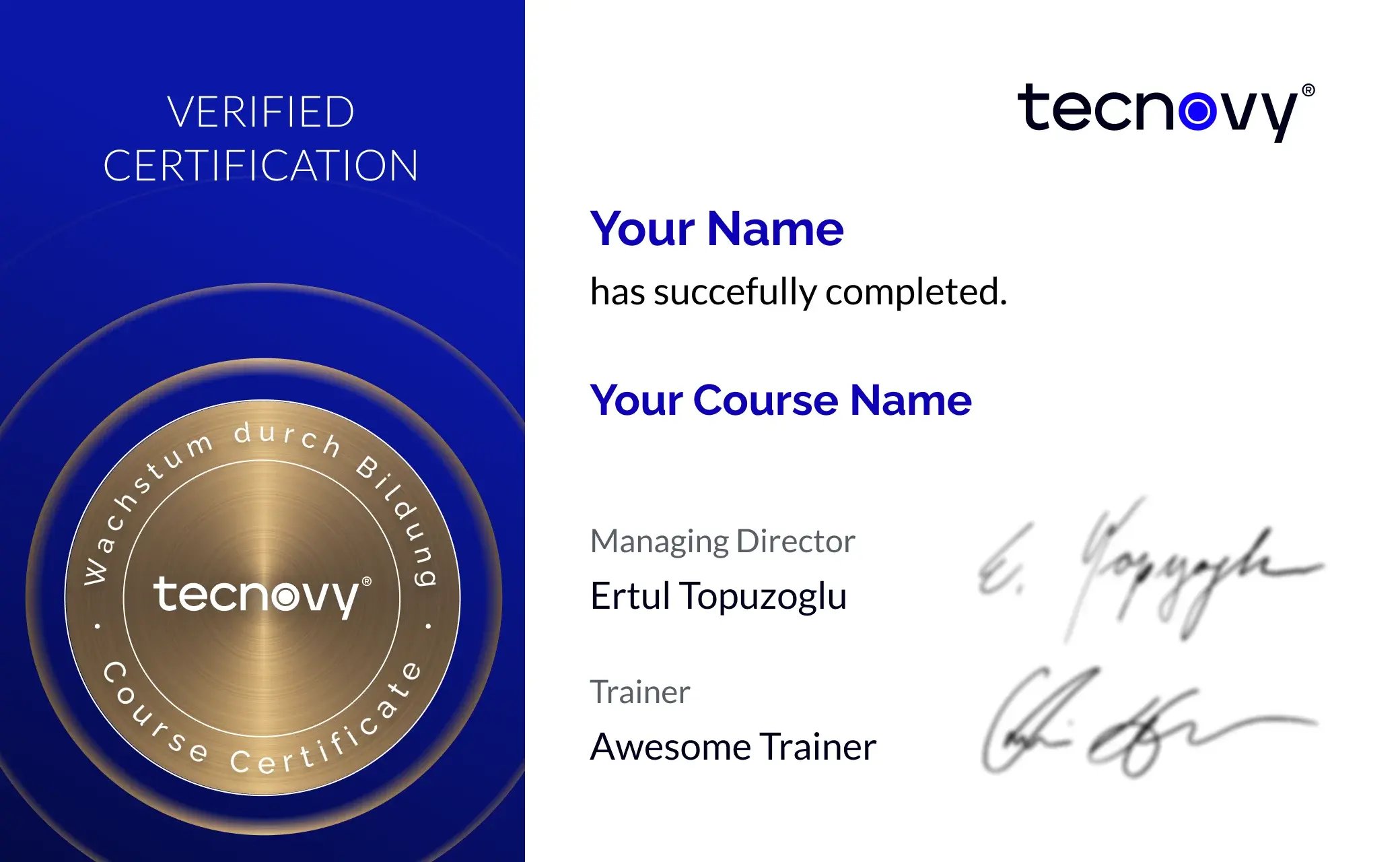
Proof of attendance

Certificate of participation

≥80%attendance

The tecnovy certificate of participation records your attendance of the CPRE Requirements Elicitation training, not a passed examination.

Sample of the tecnovy certificate of participation Open the Certificate Showroom tecnovy →

Offer scope

What the course price does not cover

Not included

  • Fee for the CPRE Requirements Elicitation Practitioner examinationNot part of the seminar price; you add it as a separate item during registration, where the amount is shown.

Trainers

Rudolf Siebenhofer

Rudolf Siebenhofer

IREB®

Why tecnovy

What you get on top with us

02

Certificate Showroom

Get your certificate of participation and, if you have one, add your exam certificate from E-Learning. Fully automated, beautifully designed. Just for you, only at tecnovy.

03

Flexible Date Change

If you are not able to attend the course, you can rebook your training free of charge up to one week before the start of the training.

04

Attend Twice, Pay Once

You are welcome to visit the training course online again within a year as a refresher or exam preparation.

05

No Slideshow, Hands-On!

Promised: no PowerPoint marathon. We work in groups, tie theory to practice, and you get real project examples from our experienced trainers plus the exchange with like-minded people.

06

Learn from Experts

We always guarantee you the use of didactically and methodically first-class qualified trainers who draw their knowledge from training experience as well as professional practical and project experience.

FAQs

Frequently asked questions

01Do I need the CPRE Foundation Level for the tecnovy Elicitation training?
Not for the tecnovy training, but yes for the examination. IREB requires a valid CPRE Foundation Level certificate or the BCS Practitioner Certificate in Requirements Engineering for admission to the CPRE Requirements Elicitation Practitioner examination. You can attend the training without one.
02What does the CPRE Requirements Elicitation examination look like?
The examination is about 45 multiple-choice questions in 75 minutes, and you pass from 70.00 percent of the available points. Questions carry different weights, so the threshold is about points rather than the number of correct answers. If the exam language is not your native language, you can request a 15-minute extension.
03When and where do I sit the examination after the tecnovy training?
The examination takes place after the tecnovy training at a certification body recognised by IREB, online or on site. IREB does not run examinations itself; it licenses certification bodies working to ISO/IEC 17024 to do that. You add the fee to your tecnovy registration when you book.
04What happens if I do not pass the examination?
You can retake the CPRE Requirements Elicitation examination twice with no waiting period; only after a third failed attempt does IREB require a year's pause. tecnovy gives you the second attempt as an online examination if your first sitting is within 24 hours of the training.
05Does the CPRE Requirements Elicitation certificate expire?
No. IREB states that the certificate is valid indefinitely and never needs renewing, and charges no recurring fees for it. It attests to this one Practitioner module, not to the CPRE scheme as a whole.
06Is this the former IREB Advanced Level?
Yes. IREB split the former Advanced Level into the two levels Practitioner and Specialist with syllabus version 3.0. Requirements Elicitation has been a Practitioner module since then, and older labels such as "CPRE AL" refer to the same stage. The Specialist builds on it and is assessed through a written assignment.
07What materials do I get in the tecnovy Elicitation training?
You get the seminar script and a photo record of every flipchart produced during the training. The official IREB syllabus 3.2.0 is freely available and is used in the training as the shared basis.
08Why book the CPRE Requirements Elicitation training with tecnovy?
tecnovy teaches the full syllabus 3.2.0, including the educational unit on conflict resolution that no other Practitioner module carries. tecnovy is a Swiss training provider based in Lenzburg in the canton of Aargau, and runs its IREB trainings online and on site, in German and English. Group discounts of up to 25 percent apply from three participants from one company.
09What comes after the Requirements Elicitation Practitioner?
The CPRE Specialist in the same module is the next step, and the Practitioner certificate is what admits you to it. The Specialist examination is not multiple choice but a written assignment set in your own project context, assessed by examiners recognised by IREB.

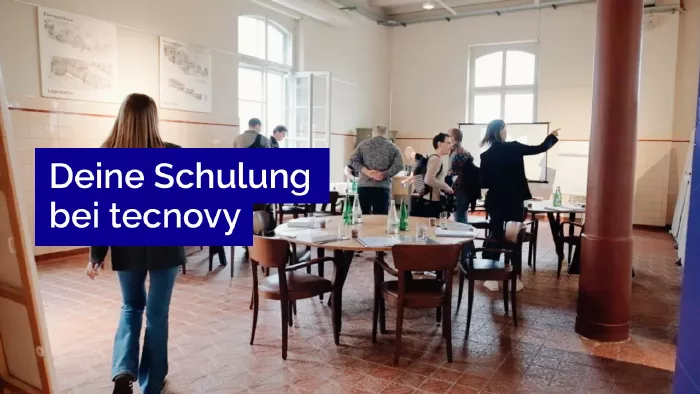
What does your training at tecnovy look like?

CPRE-ElicitationCPRE Requirements Elicitation Practitioner

Ready for the next step?

Choose a public date or plan the course for your team.

Feedback Form
What should we improve?

Tell us what we can do better next time.

Success
Error

© Copyright 2026, tecnovy GmbH, All Rights Reserved