

IT training across Europe - tecnovy makes you future-ready.

iSAQB® AGENTA - Architecture for Agentic Software Engineering Contexts

Coding agents now write whole features, and they respect only the architectural decisions that were given to them and that something actually enforces. That moves your own work from writing the implementation towards orchestrating it. AGENTA runs through seven curriculum chapters: from the fundamentals through decision-making, knowledge delivery and guardrails to governance and the shape architecture work takes next.
iSAQB Accredited Training PartnerAttendance certificate4.8/5 on ProvenExpert

What this module delivers.

AI-assisted development produces architectural drift faster than review cycles catch it. The tecnovy AGENTA training shows you how to supply agents with architectural knowledge and hold them inside guardrails, so your team keeps the speed without losing the structure.

How the training runs

Method
Practice in six of the seven chapters, 315 of 900 minutes
Basis
Official iSAQB curriculum AGENTA 2026.1-rev5, English only
Outcome
30 credit points: 20 methodical, 10 technical, no course exam

Dates & booking

Choose a date that fits

4 dates

  • EUREuro
  • USDUS Dollar
  • CHFSwiss Franc

Sessions with this symbol offer up to 25% group discount. Click “Details & Registration” to learn more.

13–15 Oct 2026CEST
Tue–Thu 09:00–17:00
Online training Group Discount
Time zone CEST
Language German
Trainer Bastian Weinlich
Seats 5+ seats

2,200

excl. VAT
03–05 Nov 2026CET
Tue–Thu 09:00–17:00
Online training Group Discount
Time zone CET
Language German
Trainer Bastian Weinlich
Seats 5+ seats

2,200

excl. VAT
24–26 Nov 2026CET
Tue–Thu 09:00–17:00
Online training Group Discount
Time zone CET
Language German
Trainer Bastian Weinlich
Seats 5+ seats

2,200

excl. VAT
08–10 Dec 2026CET
Tue–Thu 09:00–17:00
Online training Group Discount
Time zone CET
Language German
Trainer Bastian Weinlich
Seats 5+ seats
10% Earlybird Discount

2,200 −220 1,980

excl. VAT

Fit

Who this module is designed for

Typical roles

  • You answer for architecture decisions in a team that works with coding agents.
  • You decide which architectural knowledge agents receive, and in what form.
  • You have to make AI use in your company evidenced and compliant.

Prerequisites

No prerequisites

You can start right away. What you need: hands-on practice in software development or software architecture, a working grasp of repositories, build pipelines and everyday development tooling. Helpful: some first-hand experience with AI assistants or coding agents.

Consider instead SWARC4AI Covers the architecture of AI systems themselves, from data pipelines through model serving to drift and RAG. AGENTA instead puts agents to work as a tool of architecture work.

Curriculum

CPSA® AGENTA Course in Detail

Curriculum 2026.1-rev5 splits AGENTA into seven chapters across 585 teaching and 315 practice minutes. It starts at the fundamentals of LLMs and agents, runs through architectural decisions, knowledge delivery and guardrails to the extraction of architecture information, and closes at governance and the changing role of the architect.

01Introduction and fundamentals

The curriculum uses this chapter to bring along participants with no prior AI experience.

  • Separating AI-assisted, augmented, agentic and vibe coding
  • LLMs as probabilistic tools: tokens, context, reasoning, knowledge cutoff
  • The agentic loop as the ReAct pattern, and what extends it
  • Autonomy as a spectrum, from spec-driven development to agent swarms
02AI-assisted architectural decision-making

This is where a decision becomes an experiment instead of a meeting.

  • The lifecycle of an architectural decision, and what agents accelerate in it
  • Decomposing quality goals top-down into architectural drivers
  • Finding structural pain points bottom-up, through analysis and monitoring
  • Framing decisions as testable hypotheses and validating them with spikes
03Providing architectural knowledge to agents

The largest block: what an agent knows decides what it builds.

  • Which decisions, constraints and system boundaries an agent actually needs
  • Comparing representations: ADRs, architecture rules, context files, diagrams as code
  • Delivery at the right moment, through retrieval augmented generation, skills and the Model Context Protocol
  • Why more knowledge is not better: contradictory context degrades the output
04Keeping agents aligned with architectural goals

Knowledge alone is not enough; this chapter builds the enforcement.

  • Preventive and detective controls, and their trade-off between precision and coverage
  • Atomic structural rules against holistic quality attributes, thought of as fitness functions
  • Where in the process each control belongs, when drift outpaces the review cycle
  • Introducing controls into existing code incrementally, and improving them from feedback
05Architecture information extraction

The direction reverses here: from the system back to the documentation.

  • Telling as-is from to-be, and human-facing from agent-facing
  • Capturing decisions made across long agentic loops in ADRs
  • Extracting technologies, patterns and business rules from code, tests and configuration
  • Generating architecture views and keeping them versionable as Mermaid or Structurizr
06Governance and quality gates for AI usage

This chapter settles what your company has to be able to evidence.

  • The EU AI Act, copyleft licences and the roles in data protection
  • Traceability through structured logging, prompt versioning and citation
  • Billing models, vendor lock-in and data sovereignty when choosing a provider
  • Prompt injection, tool misuse and sandboxing against the OWASP LLM Top 10
07The evolving discipline of software architecture

To close, the subject is your own role and your team's.

  • Responsibility stays with people, and how you practise analytical skills deliberately
  • Spotting bias in training data and in your organisation's own artefacts
  • Measuring AI adoption hypothesis-driven, for example against DORA metrics
Official syllabus(external link)

Outcome

What you will be able to do afterwards

  1. 01

    You separate AI-assisted, agentic and vibe coding from each other and decide per task between a human, a classic tool and an agent.

  2. 02

    You frame architectural decisions as testable hypotheses and validate them with spikes, prototypes and side-by-side variant comparisons.

  3. 03

    You design agent-facing representations of architectural knowledge, from ADRs through context files to retrieval indexes.

  4. 04

    You choose delivery mechanisms for that knowledge and judge where the Model Context Protocol genuinely helps a team.

  5. 05

    You design preventive and detective controls that enforce architectural decisions on AI-generated work.

  6. 06

    You recover architectural information from code, tests and configuration, and generate current architecture views from it.

  7. 07

    You assess prompt injection, tool misuse and sandboxing against the OWASP LLM Top 10.

  8. 08

    You map the EU AI Act, copyleft licences and data-protection roles onto AI use in your own company.

Why tecnovy

What you get on top with us

02

Certificate Showroom

Get your certificate of participation and, if you have one, add your exam certificate from E-Learning. Fully automated, beautifully designed. Just for you, only at tecnovy.

03

No Slideshow, Hands-On!

Promised: no PowerPoint marathon. We work in groups, tie theory to practice, and you get real project examples from our experienced trainers plus the exchange with like-minded people.

04

Attend Twice, Pay Once

You are welcome to attend the training online again within a year as a refresher.

05

Learn from Experts

We always guarantee you the use of didactically and methodically first-class qualified trainers who draw their knowledge from training experience as well as professional practical and project experience.

06

Flexible Date Change

If you are not able to attend the course, you can rebook your training free of charge up to one week before the start of the training.

FAQs

Frequently asked questions

01Do I need CPSA-F to attend the tecnovy AGENTA training?
No. The iSAQB curriculum for the AGENTA module lists practical experience in software development or software architecture as its prerequisite, not a certification. For the later CPSA-A certification, CPSA-F is mandatory.
02Is there an AGENTA examination?
No. There is no examination for the AGENTA module. The tecnovy AGENTA training earns you 30 credit points and a certificate of participation; the assessment comes later on the path to CPSA-A certification, and it covers all modules together.
03How many credit points does AGENTA carry?
The tecnovy AGENTA training carries 30 credit points: 20 methodical and 10 technical. AGENTA awards no communicative points, and CPSA-A admission requires 70 points in total and at least 10 in each of the three areas of competence. The iSAQB may re-evaluate point allocations every 12 months; these figures are as of September 2026.
04How does the CPSA-A certification work?
CPSA-A certification consists of a written assignment. Two examiners recognised by the iSAQB assess it, and you then defend it in discussion with them. You can take it in German or English, and tecnovy is glad to help if you have questions about the process.
05How long is the AGENTA training?
The tecnovy AGENTA training runs for three days, and the iSAQB curriculum 2026.1-rev5 names three days explicitly as its minimum. Of the 900 minutes, 315 are exercises, more than a third; the heaviest chapter is providing architectural knowledge to agents, at 150 teaching minutes.
06What is the difference between AGENTA and SWARC4AI?
The direction: AGENTA treats AI as a tool of architecture work, where agents write the code, you supply them with architectural knowledge, hold them inside guardrails and settle governance and traceability. SWARC4AI treats AI as the subject of architecture work: data pipelines, model serving, drift, RAG and EU AI Act classification for systems that contain AI themselves. If you build AI systems, book SWARC4AI at tecnovy; if you develop with agents, book AGENTA.
07Is AGENTA a course about prompt engineering?
No. Prompt and context engineering is one of six learning goals in the opening chapter, which runs 60 teaching minutes in total. The weight of the tecnovy AGENTA training then falls on architectural knowledge for agents, guardrails and governance.
08Do I need a particular AI tool or model for AGENTA?
No, the iSAQB curriculum prescribes no product. It describes the agentic loop, the autonomy spectrum and orchestration patterns, which is the part that survives a change of vendor. First-hand experience with any coding agent will still help you in the tecnovy AGENTA training.

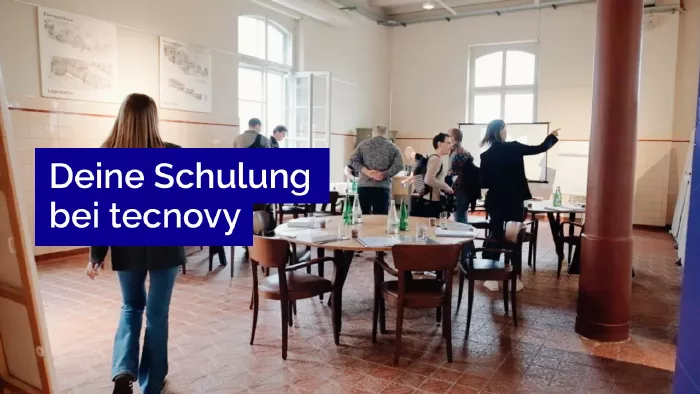
What does your training at tecnovy look like?

AGENTAAGENTA - Architecture for Agentic Software Engineering Contexts

Ready for the next step?

Choose a public date or plan the course for your team.

Feedback Form
What should we improve?

Tell us what we can do better next time.

Success
Error

© Copyright 2026, tecnovy GmbH, All Rights Reserved